Change resourceExample 6
Mathematics · Chapter 6 · NCERT Examples
Verified NCERT questions and solutionsSolutions are checked independently and follow the supplied NCERT chapter edition.
In Figure 6.31, OA × OB = OC × OD. Show that ∠A = ∠C and ∠B = ∠D.
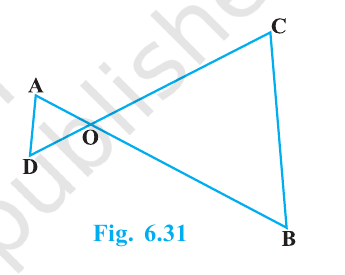 Figure 6-31 from the supplied NCERT chapter.
Solution
Given:
OA × OB = OC × OD in the intersecting-segment diagram.
To prove:
Angle A equals angle C, and angle B equals angle D.
Figure 6-31 from the supplied NCERT chapter.Proof:
Dividing both sides by OC × OB:
Also, ∠AOD = ∠COB because they are vertically opposite angles. ...(2)
From (1) and (2), the two sides including the equal angle are proportional.
Therefore, △AOD ∼ △COB by SAS similarity, with A ↔ C and D ↔ B.
Corresponding angles of similar triangles are equal, so ∠A = ∠C and ∠D = ∠B.
Final answer
∠A = ∠C and ∠B = ∠D.